

Not every patient needs surgery. Not every patient is a candidate for PRP alone. Understanding the differences can help you choose the right treatment for your goals.
If you’ve started researching hair restoration, you’ve likely encountered two common treatment options:
- PRP therapy
- Hair transplantation
Many patients wonder whether one is better than the other. The reality is that these treatments serve different purposes and, in many cases, work exceptionally well together.
At Wolf Hair Restoration in Cincinnati, one of the most important parts of the consultation process is determining which approach makes the most sense for each patient’s stage of hair loss, goals, and long-term expectations.
Let’s take a closer look at how these treatments compare.
What Is PRP?
PRP stands for Platelet-Rich Plasma.
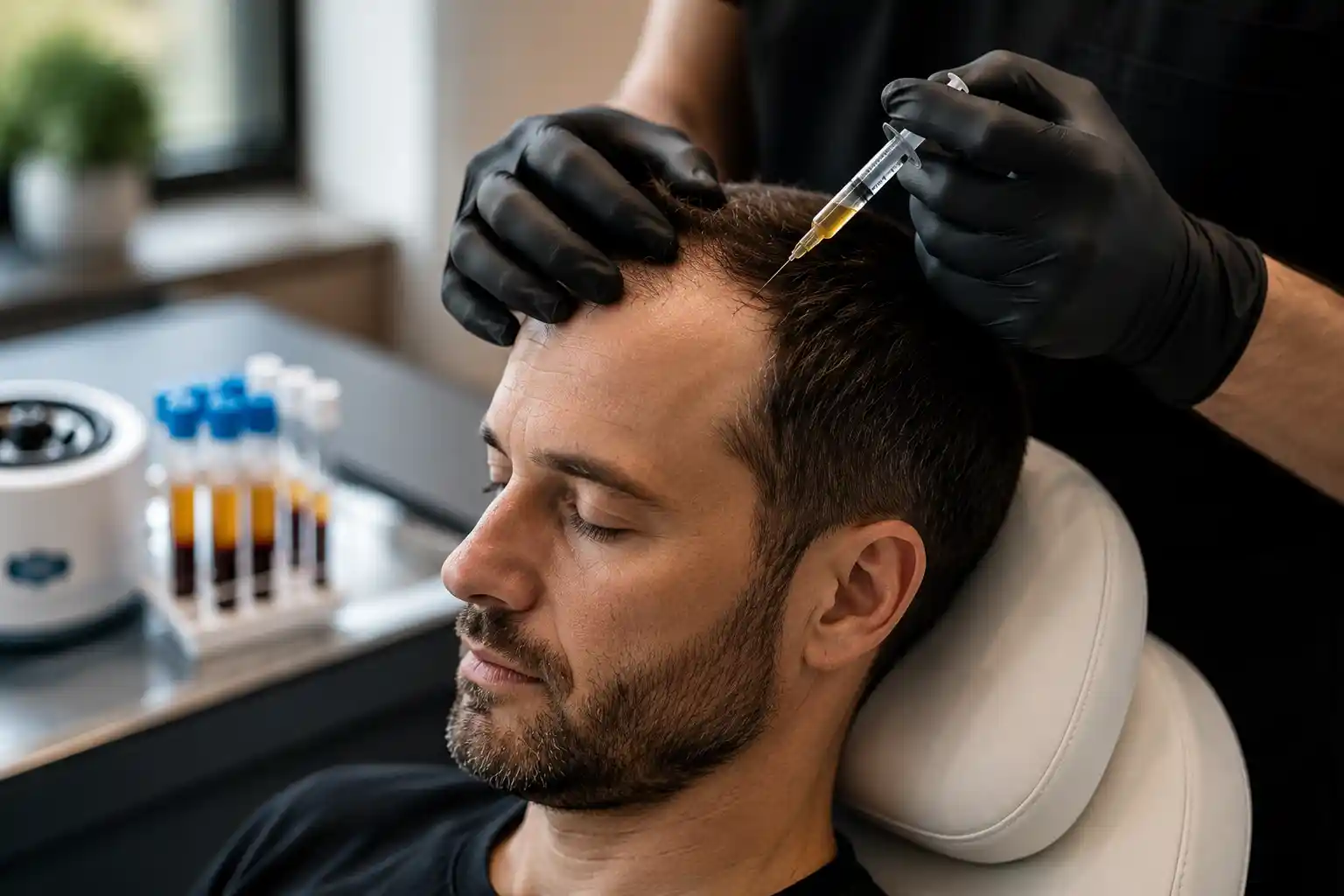
The treatment begins with a small blood draw. The blood is processed to concentrate platelets and growth factors, which are then injected into areas of thinning hair.
The goal is to stimulate existing follicles and support healthier hair growth.
PRP is considered a non-surgical treatment and requires little to no downtime.
Many patients appreciate that they can receive treatment and return to normal activities the same day.
What Is a Hair Transplant?
A hair transplant is a surgical procedure that relocates healthy, genetically resistant hair follicles from the donor area to areas affected by thinning or baldness.
Unlike PRP, a transplant physically moves follicles into regions where hair has already been lost.
The transplanted follicles continue producing hair permanently.
At Wolf Hair Restoration, options include:
- FUE (Follicular Unit Extraction)
- FUT (Follicular Unit Transplantation)
- ARTAS® robotic-assisted FUE
Each approach is customized to the individual patient.
The Biggest Difference
The simplest way to understand the difference is this:
- PRP helps strengthen existing hair.
- Hair transplantation restores hair that has already been lost.
If follicles are still present but becoming weaker, PRP may be an effective option.
If follicles have disappeared entirely, a transplant is usually required to restore density.
Who May Be a Good Candidate for PRP?
PRP often works best for patients experiencing:
- Early-stage thinning
- Diffuse hair loss
- Reduced density
- Ongoing shedding
- Hair loss that is progressing but not yet advanced
PRP is frequently used by patients who want to be proactive before hair loss becomes severe.
It’s also popular among patients who are not yet ready for surgery.
Who May Be a Good Candidate for a Hair Transplant?
Hair transplantation is often appropriate when:
- Hairline recession is significant
- Bald spots have developed
- Crown thinning is advanced
- Density loss is substantial
- Existing follicles are no longer producing hair
For these patients, PRP alone is unlikely to create meaningful restoration because there may not be enough viable follicles remaining.
Can PRP and Hair Transplants Be Combined?
Absolutely.
In fact, many of the best treatment plans involve both approaches.
PRP may be used to:
- Support existing native hair
- Improve overall hair quality
- Complement transplant results
- Help patients maintain density over time
Rather than viewing PRP and transplantation as competing treatments, it’s often more accurate to think of them as different tools addressing different aspects of hair loss.
Which Treatment Produces Faster Results?
Both treatments require patience.
PRP results typically develop gradually over several months.
Hair transplant results generally follow a longer timeline, with significant improvement often becoming visible between four and twelve months after treatment.
Neither treatment delivers overnight transformation.
The most successful patients approach hair restoration with a long-term perspective.
Which Treatment Is More Cost Effective?
The answer depends on your goals.
If you’re experiencing early thinning, PRP may help preserve existing hair and potentially delay the need for surgery.
If hair loss is already advanced, a transplant may provide a more meaningful and permanent solution.
The most cost-effective approach is often the one that appropriately addresses your current stage of hair loss.
The Most Important Step: Proper Diagnosis
One of the biggest mistakes patients make is trying to choose a treatment before understanding the cause and extent of their hair loss.
A thorough evaluation helps determine:
- Whether follicles are still active
- The degree of hair loss progression
- Donor hair availability
- Long-term expectations
- Which treatment options are realistic
Without that assessment, it’s difficult to know whether PRP, transplantation, or a combination approach makes the most sense.
Hair Restoration Options in Cincinnati
At Wolf Hair Restoration, Dr. Scott Welden takes a personalized approach to every patient evaluation.
Some patients benefit from PRP therapy.
Some are ideal transplant candidates.
Many achieve the best results through a combination strategy designed around their unique goals and hair characteristics.
If you’re trying to decide between PRP and hair transplantation, schedule a consultation with our team. We’ll help you understand your options and create a treatment plan that fits both your current needs and your long-term goals.
Find Out Which Treatment Fits Your Goals
Not every patient needs surgery. Learn whether PRP, a hair transplant, or a combination treatment may be the most effective solution for you.